
Root Calculator – Find Square Roots, Cube Roots, and Nth Roots
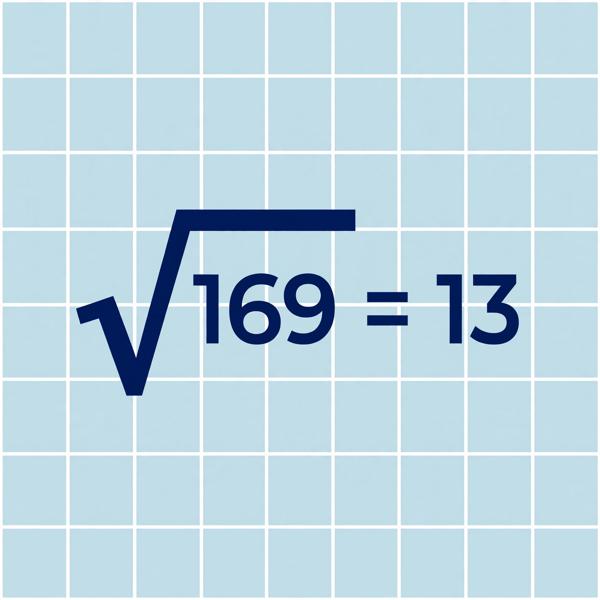
I was tiling a square bathroom floor when roots finally clicked for me. I had 169 square tiles for a floor that was exactly square, and I needed the count along one side. I typed 169 into the Root Calculator, and it said 13, because 13 × 13 = 169. That is the whole idea: a root asks which smaller number, multiplied by itself, built the number you started with. I still do the rough check in my head first, then let the tool do the heavy lifting.
At a glance:
- A root undoes a power: the square root of 169 is 13, because 13 × 13 = 169.
- The Root Calculator takes two numbers, the value and the root, and gives the answer with a check line.
- A negative number has no even root, but it does have an odd root: the cube root of -125 is -5.
- Non-perfect roots come out as decimals rounded to 6 places, like the square root of 2 at 1.414214.
- The square root of 2 is irrational, so its decimal never ends and never repeats.
What Is a Root Calculator and How Does It Work?
A Root Calculator is a tool for undoing powers. You give it a number and a root, and it tells you which number, raised to that root, gives your number back. I use this roots calculator for homework sums about squares and cubes, for side lengths, and for the odd nth root no one wants to work out by hand.
Understanding Roots in Mathematics
A root is a power read backwards. The square root of 25 is 5 because 5 × 5 = 25, and the cube root of 27 is 3 because 3 × 3 × 3 = 27. The little number in the hook of the radical sign, called the index, tells you how many times the answer multiplies by itself. With no index written, the index is 2, so √49 is 7.
How a Root Calculator Finds the Answer?
The Root Calculator on CalcSolver asks for two things only: the number and the root. Type 144 in the number box and 2 in the root box, press Calculate, and it shows The square root of 144 = 12, then a check line that reads Check: 12 to the power 2 = 144. It is a handy root finder for non-whole answers, because it gives the decimal straight away.
Root Formula and Mathematical Notation
The rule behind every root is one line: the nth root of x is x raised to the power 1/n, written ⁿ√x = x^(1/n). So the square root of x is x^(1/2) and the cube root of x is x^(1/3). The symbol √ is the radical sign, the number under it is the radicand, and the small index tells you which root to take. For the exponent side, the Exponent Calculator shows how powers and fractional exponents work. The nth root on Wikipedia sets out the notation in full.
How to Use the Root Calculator?
I have run hundreds of sums through this Root Calculator, and the routine never changes. Two boxes, one button, and a check line underneath the answer. The steps below are the whole routine, mode by mode.
Entering a Number and Selecting the Root
Type your number into the first box. That number is the radicand, the value whose root you want. Then type the root into the second box: 2 for a square root, 3 for a cube root, or any whole number for an nth root. The boxes on CalcSolver already hold 16 and 2, so the first answer you see is The square root of 16 = 4.
Using Square Root Mode
Set the root box to 2 and you are finding a square root. Enter 169 and the answer is 13, because 13 × 13 = 169. Enter 50 and the answer is a decimal, about 7.071068, because 50 is not a perfect square. I use this mode most for side lengths: a square of 144 square feet has sides of 12 feet.
Using Cube Root Mode
Set the root box to 3 and you are finding a cube root. Enter 27 and the answer is 3, because 3 × 3 × 3 = 27. Cube roots also work for negative numbers: enter -125 and the answer is -5, because -5 × -5 × -5 = -125. I use this mode for volumes, since a cube of 125 cubic centimetres has edges of 5 centimetres.
Using Nth Root Mode
Set the root box to any whole number above 3 and you are using nth root mode. Enter 625 with root 4 and the answer is 5, because 5 × 5 × 5 × 5 = 625. Enter 32 with root 5 and the answer is 2. An nth root calculator earns its keep here, because nobody wants to guess a fifth root by hand. Only the index changes between the modes.
Understanding Results and Verification
The Root Calculator returns two things: the answer itself, like The square root of 144 = 12, and a check line that proves it, like Check: 12 to the power 2 = 144. For a cube root the check line reads Check: -5 to the power 3 = -125, and for any other root the pattern is the same: Check, then the answer to the power of the root equals your number. I check every answer against that line before I trust it, because a mistyped index is the easiest mistake to make. If you type 0 as the root it says “The root cannot be zero.”, and a negative number under an even root says “There is no real even root of a negative number.”
Reading Step-by-Step Explanations
Under the answer, the Root Calculator writes a Working list with three steps: 1. Raise 144 to the power 1/2, 2. 144 to the power 1/2 = 12, and 3. Check: 12 to the power 2 = 144. That is the whole explanation, because the check is the working. I check the check line first when an answer looks wrong, and nine times out of ten I typed the wrong number.
Using Laws Mode and Compare Mode
The tool itself has no Laws mode and no Compare mode, so these two are guide sections, worked by hand below. Laws mode means applying the product, quotient and power rules in the Properties section. Compare mode means lining up two radicals and deciding which is bigger, which sits in the Comparing Two Radicals section. Both are hand working, not tool buttons, and both use the same check: raise the answer back to the power.
Types of Roots Explained
Roots come in three sizes, and the rules change a little with each one. The square root is the one you meet first, the cube root is the one that allows negatives, and the nth root is the general case. I use the Root Calculator on CalcSolver for all three, because only the index changes.
Square Roots
A square root asks which number, multiplied by itself once, gives your number. The square root of 36 is 6, the square root of 100 is 10, and the square root of 2 is about 1.414214. Every positive number has two square roots, because 6 × 6 = 36 and -6 × -6 = 36 as well. The radical sign on its own means the positive one, called the principal root.
Cube Roots
A cube root asks which number, multiplied by itself twice, gives your number. The cube root of 8 is 2, the cube root of 64 is 4, and the cube root of 1000 is 10. Unlike square roots, cube roots work for negative numbers too: the cube root of -8 is -2, because -2 × -2 × -2 = -8. Every real number has exactly one real cube root, so the Root Calculator never gives an error for a negative cube root.
Nth Roots
An nth root is the general case: the nth root of x is the number that, raised to the power n, gives x. The fourth root of 81 is 3, the fifth root of 32 is 2, and the sixth root of 64 is 2. When n is even, a negative number has no real nth root. When n is odd, it has one real nth root, and it is negative.
Principal Roots and Multiple Roots
The principal root is the one the radical sign gives you: the positive root for even indexes, and the single real root for odd indexes. The equation x² = 25 has two answers, 5 and -5, but the principal square root √25 is 5 on its own. The equation x³ = -27 has one real answer, -3, and the principal cube root ∛(-27) is -3. Mixing up a root with the answers to an equation is the most common slip in this topic.
Positive, Negative, and Irrational Roots
A positive number has a positive principal root. A negative number has no real even root and one negative odd root. An irrational root cannot be written as a fraction, like the square root of 2, the square root of 3 at about 1.732051, and the square root of 5 at about 2.236068. The tool gives these as decimals rounded to 6 places, exact enough for homework, but the true value goes on for ever without repeating.
Properties and Rules of Roots
Roots follow a small set of rules, and once you know them you can simplify radicals, combine them and compare them without reaching for the Root Calculator. Every rule below comes with one worked example, and I use this roots calculator on CalcSolver to confirm each one.
Product Rule for Radicals
The product rule says the root of a product is the product of the roots: √(a × b) = √a × √b. So √(9 × 4) = √36 = 6, and √9 × √4 = 3 × 2 = 6. It also works the other way round: √2 × √3 = √6, which is about 2.449490. I use this rule to break a big number into factors I recognise, like turning √50 into √25 × √2, which is 5√2.
Quotient Rule for Radicals
The quotient rule says the root of a quotient is the quotient of the roots: √(a ÷ b) = √a ÷ √b. So √(16 ÷ 4) = √4 = 2, and √16 ÷ √4 = 4 ÷ 2 = 2. A cleaner example is √18 ÷ √2 = √9 = 3, where the division inside the root gives a whole number. The rule only needs a non-zero denominator, and it works for cube roots and nth roots the same way.
Power of a Root
Raising a root to its own index gives the original number back: (√a)² = a and (∛a)³ = a. So (√7)² = 7 and (∛8)³ = 8. When there is a number in front of the root, square the whole thing: (2√5)² = 4 × 5 = 20. This is the rule the Root Calculator uses for its check line, and the fastest way to confirm any root you worked out by hand.
Nested Radicals
A nested radical is a root inside a root, and the rule is simple: a root of a root is a root whose index is the product of the two indexes. So √(√16) = ⁴√16 = 2, because the square root of 16 is 4 and the square root of 4 is 2. In the same way, √(√81) = ⁴√81 = 3. Work from the inside out and the nesting falls apart on its own.
Rationalizing the Denominator
A fraction with a root on the bottom is tidied up by multiplying the top and bottom by that same root. So 1 ÷ √2 becomes √2 ÷ 2, which is about 0.707107, and 3 ÷ √5 becomes 3√5 ÷ 5. The value does not change, because you multiplied by √2 ÷ √2, which is 1. For the fraction arithmetic itself, the Fraction Calculator handles the multiplying and reducing step by step.
Roots in Exponent Form
Every root is a fractional exponent in disguise: √x = x^(1/2), ∛x = x^(1/3), and ⁿ√x = x^(1/n). That turns root problems into exponent problems: 16^(1/2) = 4, 27^(1/3) = 3, and 8^(2/3) = 4, because the cube root of 8 is 2 and 2² = 4. In the same way, 16^(3/4) = 8. The numerator is the power, the denominator is the root, and that is all there is to it.
Comparing Two Radicals
To compare two radicals, get them into the same form and compare the numbers underneath. The square root of 50 is about 7.071068 and the square root of 48 is about 6.928203, so √50 is bigger than √48. With numbers in front, square the whole thing first: 2√3 = √12, which is about 3.464102, and 3√2 = √18, which is about 4.242641, so 3√2 is bigger than 2√3. Squaring both sides is safe here because both sides are positive.
How to Calculate Roots Manually?
The Root Calculator is fast, but knowing the hand methods is what makes the answers mean something, and it is what exam papers ask for. I confirm each one on the calculator afterwards.
Finding a Square Root
Start by estimating between two whole numbers. The square root of 50 sits between 7 and 8, because 7² = 49 and 8² = 64, and it is much closer to 7, at about 7.07. For an exact answer, the long-division method works digit by digit: pair the digits of 144 as 1 and 44, take the largest square below 1, then bring down 44 and find the digit that fits, which gives 12. I still do the estimate first, because it tells me at once if I typed an extra zero.
Calculating a Cube Root
Estimate the same way, between two cubes. The cube root of 100 sits between 4 and 5, because 4³ = 64 and 5³ = 125, and it lands at about 4.64. Perfect cubes are the easy ones: the cube root of 27 is 3 and the cube root of 64 is 4. For a negative cube root, find the root of the positive number and put the minus sign back: the cube root of -27 is -3.
Finding the Nth Root of a Number
The nth root works like the cube root, with the index telling you how many times to multiply. The fourth root of 81 is 3 and the fifth root of 32 is 2. When the number is not perfect, estimate between two whole powers: the fourth root of 100 sits between 3 and 4, because 3⁴ = 81 and 4⁴ = 256, and the CalcSolver root finder would give about 3.16. The estimate is the skill; the decimal is the Root Calculator’s job.
Understanding Fractional Exponents
A fractional exponent is a root and a power written together: the denominator is the root and the numerator is the power. So 16^(1/2) = 4, and 27^(2/3) = 9, because the cube root of 27 is 3 and 3² = 9. Work the root first and the power second, and the numbers stay small. This is the same rule an nth root calculator uses under the hood, since it raises your number to the power 1/n.
Root Calculator Examples With Step-by-Step Solutions
These are the five examples I come back to. I ran every one through the Root Calculator on CalcSolver, and the steps below are what it showed me.
What Is the Square Root of 169?
This is the number from my bathroom floor: 169 tiles, 13 along each side. The square root of 169 is 13, because 13 × 13 = 169. The Root Calculator shows The square root of 169 = 13, then the check line reads Check: 13 to the power 2 = 169. A quick root calc like this is the fastest way to turn an area back into a side length.
What Is the Cube Root of -125?
A negative number can have a cube root, because three negatives multiply to a negative. The cube root of -125 is -5, because -5 × -5 × -5 = -125. The Root Calculator shows The cube root of -125 = -5, then the check line reads Check: -5 to the power 3 = -125. If the root had been even, the tool would have shown an error, because a negative number has no even root.
What Is the Fourth Root of 625?
The fourth root of 625 is 5, because 5 × 5 × 5 × 5 = 625. The Root Calculator shows The 4th root of 625 = 5, then the check line reads Check: 5 to the power 4 = 625. I like this one because 625 is a perfect fourth power and a perfect square at the same time: its square root is 25, and the square root of 25 is 5.
Understanding the Square Root of 144
The square root of 144 is 12, because 12 × 12 = 144. It is a good example to try first: open the page and the boxes already hold 16 and 2, but type 144 and 2 and the answer is The square root of 144 = 12. The Working list reads 1. Raise 144 to the power 1/2, 2. 144 to the power 1/2 = 12, and 3. Check: 12 to the power 2 = 144.
Why Is the Square Root of 2 Irrational?
The square root of 2 is about 1.414214, and its decimal never ends and never repeats, which is what irrational means. Suppose it could be written as a fraction p ÷ q in lowest terms. Then p² = 2q², so p² is even, which means p is even. Write p as 2k, and the equation becomes 4k² = 2q², so q² = 2k², which means q is even too. But p and q were in lowest terms, so they cannot both be even. The contradiction shows no such fraction exists.
Real-World Applications of Roots
Roots are not just a school topic. They turn up anywhere a square or a cube has to be undone: a side from an area, an edge from a volume, a speed from a height. A quick root calc settles most of these in seconds, and the Root Calculator on CalcSolver is the one I reach for. Roots sit in the US Common Core Grade 8, UK GCSE, India NCERT Class 10 and SAT/ACT prep, and Khan Academy teaches the same rules.
Using Roots in Algebra and Mathematics
In algebra, roots solve power equations. The equation x² = 49 has two answers, 7 and -7, because both square to 49. The equation x³ = 64 has one real answer, 4, because 4 × 4 × 4 = 64. The Root Calculator checks these in a second, and the check line shows the multiplication that proves them.
Roots in Geometry and Area Calculations
In geometry, area and volume are powers, so roots undo them. A square with an area of 144 square feet has sides of 12 feet, because √144 = 12. A circle with an area of 50.27 square centimetres has a radius of 4 centimetres, because 50.27 ÷ π is 16 and √16 = 4. A cube with a volume of 125 cubic centimetres has edges of 5 centimetres, because ∛125 = 5. For the area and perimeter working, the Geometry Calculator covers circles, rectangles and triangles.
Applications in Science and Engineering
In science, roots sit inside the formulas for motion and waves. The speed of something dropped from a height comes from v = √(2gh): drop a stone from 20 metres, with g at 9.8, and the speed on landing is √392, about 19.8 metres per second. A pendulum’s swing time uses the square root of its length, so a longer pendulum swings more slowly.
Roots in Everyday Calculations
In everyday life, roots mostly hide inside squares. A square photo with an area of 100 square centimetres has sides of 10 centimetres, so the frame you need is 10 by 10. Doubling the area of a square multiplies its side by √2, about 1.41, not by 2. A quick root calc on my phone settles these in seconds, and the check line means I never have to trust a guess.
Common Root Calculation Mistakes to Avoid
I have made every one of these, some of them twice. Run your numbers through the Root Calculator on CalcSolver first, because the check line catches most of them if you read it.
Confusing Square Roots With Principal Roots
The radical sign gives the principal root only: √25 = 5, not ±5. The equation x² = 25 is a different question, and its answers are 5 and -5. If a problem asks for the square root, give 5. If it asks for the solutions to x² = 25, give both.
Miscalculating Negative Numbers Under Even and Odd Roots
A negative number under an even root has no real answer: √(-16) does not exist as a real number, and the tool shows an error that says so. A negative number under an odd root is fine: ∛(-27) = -3. I check the sign before I press Calculate on the Root Calculator, because the minus is easy to miss.
Applying Radical Rules Incorrectly
Radical rules only work the way they are written. The square root of a sum is not the sum of the square roots: √9 + √16 = 3 + 4 = 7, but √(9 + 16) = √25 = 5, and 7 is not 5. The square root of a square is the absolute value, not the number itself: √( (-6)² ) = 6, not -6.
Confusing Roots With Exponents
A root and a power are opposites, not the same thing. The square root of x is x^(1/2), not x², and the cube root of 8 is 2, not 8³. The confusion usually starts with the notation: a small 2 up high means squared, while a small 2 in the hook of the radical sign means square root.
Frequently Asked Questions
What Is a Root Calculator Used For?
A Root Calculator finds the square root, cube root or nth root of a number, with the working shown. I use this roots calculator for side lengths from areas, edges from volumes, and homework checks. It is a root finder in the plain sense: you give it a number and a root, and it finds the number that built it.
How Do You Calculate a Square Root?
Estimate between two whole squares first, then work it out exactly. The square root of 50 sits between 7 and 8, at about 7.07. For an exact answer, use the long-division method, or type the number into the calculator with the root set to 2.
What Is the Cube Root of a Number?
The cube root of a number is the value that, multiplied by itself twice, gives the number. The cube root of 27 is 3, the cube root of 64 is 4, and the cube root of -125 is -5. Unlike square roots, cube roots work for negatives, because three negatives multiply to a negative.
How Do You Find the Nth Root of a Number?
The nth root of a number is the value that, raised to the power n, gives the number. Estimate between two whole powers, or use an nth root calculator: type the number, type n as the root, and press Calculate. For 625 with n = 4, the answer is 5.
Can You Take the Square Root of a Negative Number?
Not as a real number. A negative number has no even root, because any real number squared is positive, and the tool shows an error that says so. In complex numbers the answer uses i, where i² = -1, so √(-16) = 4i, but that is beyond the real-number work this Root Calculator does.
Why Is the Square Root of 2 Irrational?
Because it cannot be written as a fraction. If it could, written as p ÷ q in lowest terms, then p² = 2q² would force both p and q to be even, which contradicts lowest terms. Its decimal, about 1.414214, goes on for ever without repeating.
What Is the Difference Between a Root and a Fractional Exponent?
They are the same thing written two ways. The nth root of x is x raised to the power 1/n, so √x = x^(1/2) and ∛x = x^(1/3). Use whichever form is easier to work with.
What is a Principal Root?
The principal root is the root the radical sign gives you. For an even index it is the positive root, so √25 = 5. For an odd index it is the single real root, so ∛(-27) = -3. That is why the radical sign on its own never means ±5: it means the principal root, 5.
Can a Number Have More Than One Root?
Yes. Every positive number has two square roots, a positive and a negative one, because both square to the same value: 5 and -5 both square to 25. Every real number has one real cube root. An equation like x⁴ = 16 has two real answers, 2 and -2, even though the principal fourth root ⁴√16 is 2 on its own.
Related Calculators and Mathematical Tools
The Root Calculator sits well with a small set of neighbors on CalcSolver. The Exponent Calculator handles the power side of the same idea, since every root is a fractional exponent. The Geometry Calculator covers the areas and volumes that roots undo. The Long Division Calculator shows the digit-by-digit method behind the manual square root. The Fraction Calculator handles the arithmetic in rationalising a denominator, and the Percentage Calculator covers the per-cent work in homework. Together they cover the math around any root problem.
Try your own numbers now on CalcSolver: the tiles on a square floor, the volume of a cube, or the homework sum that brought you here. Type the number, type the root, and read the check line before you trust the answer. The Root Calculator does the arithmetic in a second, but checking by raising the answer back to the power is what actually keeps you right.