
Fraction Calculator
The first time fractions stopped feeling like schoolwork, I was standing in the kitchen with a measuring cup in my hand. The recipe said 3/4 cup, but the only measure I could find was a 1/4 cup. Three scoops later, I realised I had been adding fractions without knowing it. That evening I opened a Fraction Calculator and checked my answer in seconds.
What Is a Fraction Calculator?
A Fraction Calculator adds, subtracts, multiplies and divides fractions, mixed numbers and whole numbers, and shows each step. People also call it a fractions calculator: it does the job of the fraction keys, only it shows the working. A calculator with fractions built in is the fastest way to check homework, double a recipe or split a bill, and a calculator for fractions is the one I open first.
How to Use the Fraction Calculator?
It takes less than a minute once you know the four moves below. I follow the same order every time: skipping a step is how wrong answers happen. Using one is simple: enter, pick, and read. On load, the boxes already show 1/2 + 1/3, and you press Calculate to see the answer.
Enter Your Fractions
Type the first fraction into the boxes: the top box takes the numerator, the bottom takes the denominator. There is no whole-number box, so a mixed number goes in as an improper fraction: 2 1/2 goes in as 5/2. It takes improper fractions too, so 7/3 goes in exactly as it is. Check each box first: one wrong digit gives a wrong answer. If a denominator is 0, the tool says “A denominator cannot be 0.”
Select a Mathematical Operation
Pick add, subtract, multiply or divide. Addition and subtraction need a common denominator, multiplication and division do not. If you pick the wrong one, the answer will still look neat, so read the sign twice.
Get Your Answer with Step-by-Step Solutions
A good result shows its working. For 3/8 + 5/12, the steps read 3/8 + 5/12 = 36/96 + 40/96 = 76/96, then simplify by dividing the top and bottom by 4 to get 19/24, then give the decimal: 19/24 = 0.7917. The tool multiplies the denominators instead of finding the lowest common denominator, so its steps look different from the hand method, but the answer is the same. I type calculator fractions like 3/8 and 5/12 into the boxes and read the steps line by line. A Fraction Calculator prints each of those lines, so you learn the method instead of copying a number.
View Your Answer in Different Formats
The answer appears as a simplest fraction and a decimal, and as a mixed number when the answer is over 1. 3/8 + 5/12 gives 19/24, which is 0.7917. The tool shows no percentage: to get one, I convert the decimal by hand, so 19/24 is about 79.17%. A calculator with fractions in these formats means I rarely convert by hand afterwards.
What Is a Fraction?
A fraction is one part of a whole. The top number is the numerator, how many parts you have. The bottom number is the denominator, how many equal parts the whole is cut into. In 3/8, you have 3 parts out of 8. Every Fraction Calculator starts from this idea.
Types of Fractions
Five types cover almost every fraction you will meet.
Proper Fractions
A proper fraction is smaller than 1, because the numerator is smaller than the denominator. 3/4, 1/2 and 5/8 are all proper fractions.
Improper Fractions
An improper fraction is 1 or more, because the numerator is equal to or bigger than the denominator. 7/3, 9/8 and 5/5 are improper fractions. 7/3 is 2 1/3.
Mixed Numbers
A mixed number is a whole number plus a proper fraction, such as 2 1/3 or 1 3/4. 7/3 becomes 2 1/3, two wholes and a third left over.
Equivalent Fractions
Equivalent fractions look different but mean the same amount: 1/2, 2/4 and 4/8 are all the same value. Multiply or divide the top and bottom by the same number to make them.
Unit Fractions
A unit fraction has 1 on top, such as 1/2, 1/3 or 1/8. It is one single part of a whole, and every other fraction is built from unit fractions: 3/8 is three 1/8 parts put together.
How to Add Fractions?
Adding fractions is easy once the denominators match. When they already match, add the tops and keep the bottom. When they do not, find the least common denominator first, then add. It handles the matching for you, but knowing the rule by hand is what stops the silly mistakes.
Adding Fractions with the Same Denominator
Keep the denominator and add only the numerators. 1/4 + 1/4 is 2/4, which simplifies to 1/2. 3/8 + 2/8 is 5/8, and 5/8 is already in lowest terms.
Adding Fractions with Different Denominators
Find the least common denominator, the smallest number both denominators divide into. For 1/4 + 1/3, the LCD is 12: 1/4 becomes 3/12 and 1/3 becomes 4/12, so the sum is 7/12. For 3/8 + 5/12, the LCD is 24: 9/24 + 10/24 is 19/24, which the tool shows as 0.7917.
Adding Mixed Numbers
Turn each mixed number into an improper fraction first – the tool takes improper fractions only: whole times denominator, plus the numerator. 2 1/2 + 1 3/4 becomes 5/2 + 7/4, and with the LCD of 4 that is 10/4 + 7/4, which is 17/4, or 4 1/4. The tool shows it as 17/4 = 4 1/4 as a mixed number = 4.25 as a decimal.
How to Subtract Fractions?
Subtracting fractions follows the same rule as addition: match the denominators first, then subtract the numerators. The only new idea is the sign: if you take a larger fraction from a smaller one, the answer is negative. It does the same matching first, so subtraction feels like addition with a minus sign.
Subtracting Fractions with the Same Denominator
Leave the denominator alone and subtract just the numerators. 3/4 – 1/4 is 2/4, which simplifies to 1/2. 7/9 – 2/9 is 5/9. If the answer is negative, keep one minus sign on the numerator and leave the denominator positive.
Subtracting Fractions with Different Denominators
Find the LCD first, then subtract. For 5/6 – 1/3, the LCD is 6: 5/6 – 2/6 is 3/6, which simplifies to 1/2. For 7/8 – 1/4, the LCD is 8: 7/8 stays 7/8 and 1/4 becomes 2/8, so the answer is 5/8.
Subtracting Mixed Numbers
Turn each mixed number into an improper fraction first – the tool takes improper fractions only – then subtract. 2 3/4 – 1 1/2 becomes 11/4 – 3/2, and with the LCD of 4 that is 11/4 – 6/4, which is 5/4, or 1 1/4. The tool shows 5/4 as 1 1/4 as a mixed number, or 1.25 as a decimal.
How to Multiply Fractions?
Multiplying fractions is the easiest of the four operations, because there is no common denominator to find. Multiply the tops together, multiply the bottoms together, then simplify.
Multiplying Fractions Rule
Multiply the numerators to get the new numerator, and multiply the denominators to get the new denominator. 2/3 x 4/5 is 8/15. 3/4 x 1/6 is 3/24, which simplifies to 1/8. Cross-cancel first to make the numbers smaller: in 2/3 x 3/4, cancel the 3s and you get 2/4, which is 1/2.
Multiplying Mixed Numbers
Turn each mixed number into improper fractions first – the tool takes improper fractions only – then multiply. 1 1/2 x 2 2/3 becomes 3/2 x 8/3, which is 24/6, or 4. If the answer is improper, convert it back to a mixed number; the tool shows it that way too when the answer is over 1.
Multiplying a Fraction by a Whole Number
Write the whole number as a fraction with a denominator of 1, then multiply. 3 x 2/5 becomes 3/1 x 2/5, which is 6/5, or 1 1/5. Half of 5/8 is 5/8 x 1/2, which is 5/16, or 0.3125 as a decimal. The word of in a problem always means multiply.
How to Divide Fractions?
Dividing fractions looks hard until you learn the one trick: flip the second fraction and multiply. Keep the first fraction, change division to multiplication, flip the second fraction, then multiply normally.
Fraction Division Rule (Keep, Change, Flip)
Keep the first fraction, change the divide sign to multiply, and flip the second fraction. 2/3 divided by 4/5 becomes 2/3 x 5/4, which is 10/12, and that simplifies to 5/6. 3/4 divided by 1/6 becomes 3/4 x 6/1, which is 18/4, or 9/2, or 4 1/2. The most common calculator fractions mistake is flipping the first fraction instead of the second: Keep-Change-Flip applies to the second fraction only.
What Is a Reciprocal?
The reciprocal of a fraction swaps the numerator and the denominator. The reciprocal of 3/7 is 7/3, and the reciprocal of 2/3 is 3/2. Any number multiplied by its reciprocal equals 1: 2/3 x 3/2 is 1. For a whole number, the reciprocal is 1 over that number: the reciprocal of 5 is 1/5.
Dividing Mixed Numbers
Turn both mixed numbers into improper fractions first – the tool takes improper fractions only. 2 1/2 divided by 1 1/4 becomes 5/2 divided by 5/4, then 5/2 x 4/5, which is 20/10, or 2. 1 1/2 divided by 3/4 becomes 3/2 x 4/3, which is 12/6, or 2. Simplify at the end and convert back to a mixed number.
How to Simplify Fractions to Lowest Terms?
Simplifying means dividing the top and bottom by the same number until no common factor is left. A fraction is in lowest terms when the numerator and denominator share no common factor other than 1. A Fraction Calculator reduces every answer this way, and doing it by hand takes three steps.
Steps to Simplify a Fraction
First, find the largest number that divides both the numerator and the denominator. Second, divide both by it. Third, repeat until the GCF is 1. For 18/24, the GCF is 6, so 18 divided by 6 is 3 and 24 divided by 6 is 4, and the simplified fraction is 3/4.
Finding the Greatest Common Factor (GCF)
The GCF is the largest number that divides evenly into both the numerator and denominator. List the factors of each number and pick the largest one they share. A Fraction Calculator divides both parts by the GCF at once: for 36/48, the GCF is 12, so the answer is 3/4.
Understanding Equivalent Fractions
Equivalent fractions are the other side of simplifying. Multiplying the top and bottom by the same number gives an equivalent fraction, and dividing by the same number brings it back. 3/4, 6/8 and 12/16 all mean the same amount. Simplifying is just finding the simplest member of that family.
Converting Between Fractions and Mixed Numbers
Mixed numbers and improper fractions are the same value in two outfits. A Fraction Calculator shows both: type an improper fraction in, and it gives the mixed number back when the answer is over 1.
Improper Fraction to Mixed Number
Divide the top number by the bottom number. The quotient becomes the whole number, the remainder becomes the new numerator, and the denominator stays the same. 17/5 is 3 remainder 2, so it is 3 2/5. 7/3 is 2 remainder 1, so it is 2 1/3.
Mixed Number to Improper Fraction
Start by multiplying the whole number by the denominator, then add the numerator on top, and the denominator stays put. 4 3/7 becomes (4 x 7) + 3 over 7, which is 31/7. 2 1/3 becomes 7/3.
Converting Fractions to Decimals and Percentages
Fractions, decimals and percentages are three ways to write the same amount. A Fraction Calculator switches between the fraction and the decimal; the percentage I work out by hand.
How to Convert a Fraction to a Decimal?
Divide the top by the bottom. 3/4 is 3 divided by 4, which is 0.75. 1/8 is 0.125, and 2/5 is 0.4. Some fractions never end: 1/3 is 0.333, with the 3 repeating for ever.
How to Convert a Decimal to a Fraction?
Put the decimal over its place value, then simplify. 0.75 is 75/100, and the GCF of 75 and 100 is 25, so it gives 3/4. 0.6 is 6/10, which simplifies to 3/5.
How to Convert a Fraction to a Percentage?
Convert the fraction to a decimal first, then multiply by 100. 3/4 is 0.75, and 0.75 times 100 is 75%. 2/5 is 0.4, which is 40%, and 1/8 is 0.125, which is 12.5%.
Working with Negative Fractions and Whole Numbers
Negative fractions follow the same rules as positive ones, with one extra job: keeping track of the sign. A Fraction Calculator treats the sign like part of the number, so the arithmetic stays the same.
How to Calculate with Negative Fractions?
Add and subtract negative fractions the same way as positive ones: find the common denominator, then apply the sign rules. -1/2 + 1/4 is -1/4. 1/2 – 3/4 is -1/4. Multiplying and dividing follow the whole-number sign rules: two negatives make a positive.
Fraction Calculations with Whole Numbers
A whole number is a fraction with a denominator of 1, so it fits every operation. A Fraction Calculator has no whole-number box, so write 5 as 5/1 yourself: 5 – 2/3 is 13/3, or 4 1/3. 3 x 1/4 is 3/4. Once the whole number is over 1, the fraction rules take over.
Fraction Calculator Examples and Real-Life Applications
Fractions show up everywhere: in the kitchen, at the dinner table, on the building site and in the classroom. This is where it earns its keep, because real problems never come with neat denominators.
Cooking and Recipe Measurements
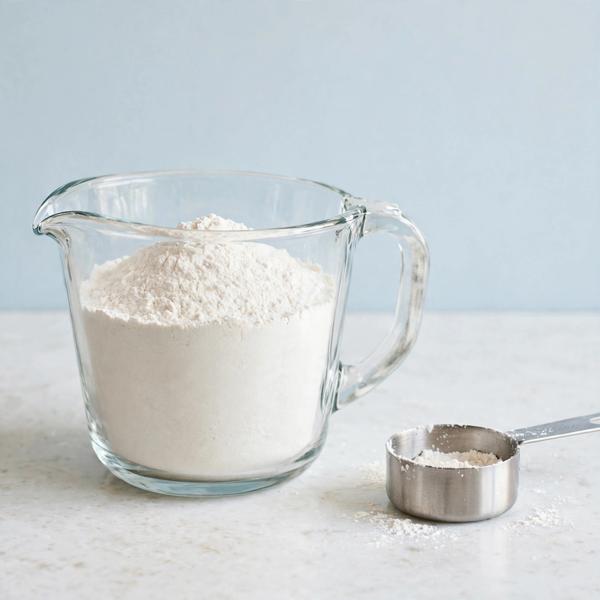
A recipe calls for 3/4 cup of flour, but I am making a double batch. A Fraction Calculator doubles 3/4 cup to 1 1/2 cups in one step. Halving is just as easy: half of 2/3 cup is 1/3 cup. Measuring cups are fractions you can hold in your hand.
Splitting Bills and Sharing Costs
Three friends share a 90 bill. A Fraction Calculator splits 90 into three 30s: each owes 1/3, which is 30. One friend covers two portions: 2/3 of 90 is 60. Splitting by fractions keeps the shares exact.
Measuring and Construction
A board measures 7/8 inch thick. Trimming off 1/4 inch leaves 7/8 – 1/4, which is 7/8 – 2/8, or 5/8 inch. A 3/4 metre shelf and a 1/2 metre bracket fit together when you add the fractions first and cut once.
Grades and Test Scores
A student gets 24 out of 30 questions right. A Fraction Calculator turns 24/30 into 4/5, which is 0.8, or 80%. Another scores 18 out of 20, which is 9/10, or 90%. Fractions turn marks into percentages without any guesswork.
Common Fraction Mistakes and How to Avoid Them?
The same five mistakes appear in homework at every level. Adding denominators: 1/2 + 1/3 is 5/6, not 2/5. Forgetting to simplify the answer. Skipping the mixed-number conversion before multiplying or dividing. Flipping the first fraction instead of the second when dividing. And swapping the numerator and denominator. A Fraction Calculator catches the first four the moment you read the steps.
Fraction Operations: Quick Reference Formula Table
Every fraction operation follows a fixed rule. Use this table as a cheat sheet.
| Operation | Formula | Example |
|---|---|---|
| Addition | a/b + c/d = (ad + bc) / bd | 1/4 + 1/3 = 7/12 |
| Subtraction | a/b – c/d = (ad – bc) / bd | 5/6 – 1/3 = 1/2 |
| Multiplication | a/b x c/d = ac / bd | 2/3 x 3/4 = 1/2 |
| Division | a/b / c/d = ad / bc | 3/4 / 1/2 = 1 1/2 |
| Simplification | (a / GCF) / (b / GCF) | 18/24 = 3/4 |
Frequently Asked Questions
Most questions about a Fraction Calculator come down to the same few ideas: proper and improper, GCF and LCD, and why denominators must match. Here are the answers I give most often.
What Is the Difference Between a Proper and Improper Fraction?
A proper fraction is smaller than 1, like 3/5. An improper fraction is 1 or more, like 7/4, and it can always be rewritten as a mixed number.
Can I Use a Fraction Calculator for Mixed Numbers?
Yes, but enter the mixed number as an improper fraction: 2 1/2 goes in as 5/2, because there is no whole-number box. A fractions calculator works it out and shows the answer as a mixed number when it is over 1.
How Do I Find the Least Common Denominator (LCD)?
List the multiples of each denominator and take the smallest number in both lists. For 4 and 6, the multiples meet at 12, so the LCD is 12.
What Is the Difference Between GCF and LCD?
The GCF divides both the numerator and denominator, and it simplifies fractions. The LCD is the smallest number both denominators divide into, and it adds and subtracts fractions. They serve opposite jobs.
Why Do Fractions Need a Common Denominator for Addition and Subtraction?
Denominators are the unit being counted. Adding 1/4 and 1/3 directly mixes fourths and thirds, like apples and oranges. Converting both to twelfths puts them in the same unit.
What Is the Fastest Way to Simplify a Fraction?
Divide the top and bottom by their GCF. For 18/24, the GCF is 6, so the answer is 3/4.
Can a Fraction Calculator Solve Negative Fractions?
Yes. Enter a negative numerator, such as -3 for -3/4. One negative sign makes the fraction negative; two cancel out.
Can I Calculate Fractions with Whole Numbers?
Yes. Write the whole number over 1, so 5 becomes 5/1, then use the normal fraction rules. A whole number fits every operation this way.
How Do Fractions Relate to Decimals and Percentages?
They are three ways to write the same amount. Divide to get a decimal, then multiply by 100: 3/4 is 0.75, which is 75%.
Related Math Calculators
A calculator for fractions is only one of the tools in the set. A Fraction Calculator pairs with these five, and each one handles the next step of the same problem.
Decimal to Fraction Calculator
Turns a decimal into a fraction in lowest terms: 0.75 becomes 3/4.
Mixed Number Calculator
Converts mixed numbers to improper fractions and back, for every operation.
Percentage Calculator
Finds a percentage of a number, or one number as a percentage of another.
GCF and LCM Calculator
Finds the greatest common factor and the least common multiple of two numbers.
Rounding Calculator
Rounds a number to the places you choose: 0.7917 becomes 0.79.